Understanding what is link equity is essential for anyone serious about improving search rankings and building long-term organic visibility. Link equity is closely related to link building, as the quality and relevance of backlinks can influence how search engines evaluate your website. If you are new to this concept, our guide on What is Link Building? A Complete Guide for Beginners explains how link building works and why it matters for SEO.
Link equity, often referred to as “link juice,” represents the value or authority passed from one webpage to another through hyperlinks. It plays a critical role in how search engines evaluate the importance and credibility of pages across the web. Every link acts as a signal, helping search engines determine which pages deserve higher rankings.
In practical terms, link equity can influence your website’s authority, visibility, and ability to rank for competitive keywords. Pages that receive strong and relevant links may perform better in search engine results, making link equity an important concept in modern SEO.
What Is Link Equity?

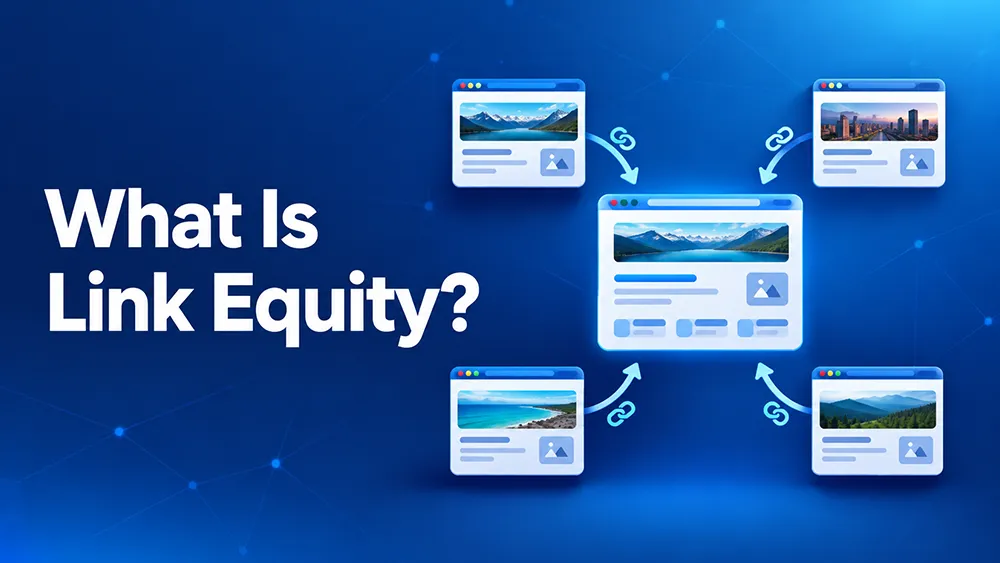
Link equity is the value transferred from one webpage to another through hyperlinks. When a page links to another page, it passes a portion of its authority, trust, and relevance.
This value transfer helps search engines understand which pages are important and how different pieces of content are connected. The more high-quality links a page receives, the more authority it accumulates.
Link equity is closely tied to backlinks. When authoritative websites link to your content, they pass significant value, boosting your credibility in the eyes of search engines. On the other hand, links from low-quality or irrelevant sources contribute little to no value.
You may also hear link equity referred to as link juice or link value. While the terminology may vary, the underlying concept remains the same: links act as pathways that transfer ranking power across the web.
How Link Equity Works: The Technical Mechanics
The pipeline analogy is the best way to visualize how authority moves. Internal and external hyperlinks act as the pipes that direct ranking power throughout the web’s ecosystem. When the pipes are connected correctly, the value flows smoothly to your target pages.
Internal vs. External Flow
- External Equity: This refers to the authority arriving from third party websites. It is the primary way to build your site’s overall baseline power and domain reputation.
- Internal Equity: This is how you distribute that earned power from your high performing power pages, such as the homepage or high traffic blog posts, to deeper service or product pages to help them rank higher.
Dofollow vs. Nofollow
A technical breakdown of link equity must include how specific HTML attributes instruct crawlers to treat a link.
- The Dofollow Standard: By default, links are intended to pass equity. Unless specified otherwise, search engines assume a link is an endorsement of the destination page.
- The Impact of Nofollow: Using rel=”nofollow”, or newer attributes like rel=”sponsored” and rel=”ugc”, can intentionally stop the flow of equity. This is typically used for login screens, paid advertisements, or untrusted user content to ensure you are not passing your hard earned authority to irrelevant or paid destinations.
Factors That Determine Link Equity Value
Not all links are created equal. Search engines use several variables to calculate how much juice to pass through a specific hyperlink:
- Relevance: A link from a niche related site carries significantly more weight than a link from a generic or unrelated source.
- Link Location (The Reasonable Surfer Model): Equity is weighted based on visibility. Links placed within the main body content are worth more than those tucked away in footers or sidebars where users are less likely to click.
- Site and Page Authority: The baseline power of the linking domain and the specific page hosting the link play a massive role in the volume of equity transferred.
- Link Density: The total number of outbound links on a single page can dilute the equity passed to each individual destination. A page with hundreds of links passes less value per link than a page with only three.
- Crawlability: You must ensure the link is visible to bots and not hidden behind complex scripts or forms that prevent the ranking power from flowing.
Why Link Equity Matters for SEO
Link equity directly impacts how well your pages perform in search results. Understanding its importance helps explain why some pages rank higher and gain visibility more easily than others.
- Improved Organic Rankings: There is a direct correlation between equity accumulation and achieving top tier positions on the search engine results pages.
- Faster Indexing and Discovery: Equity helps search engine bots prioritize your content. They follow established value paths to find your new or updated pages much faster.
- Building Brand Authority: It establishes your site as a hub of information, which signals Expertise, Authoritativeness, and Trustworthiness (E-E-A-T) to search algorithms.
- Competitive Edge: Strategic internal linking allows you to use your existing authority to help lower authority pages outrank competitors.
These benefits highlight the importance of understanding link equity and its role in website performance. To gain a clearer understanding of the concept, read the guide on what link equity is and why it is important.
Strategic Optimization: Managing the Flow
Managing your link equity requires proactive maintenance to ensure no ranking power is wasted:
- Identifying Leaks: You should regularly audit your site for broken links (404 errors). These are leaks where earned equity is being wasted. Redirecting these to relevant live pages reclaims that lost value.
- Internal Siloing: Organizing your content into topic clusters keeps equity circulating within relevant sections of the site, reinforcing your topical authority.
- Fixing Redirect Chains: Long redirect chains can dilute the strength of a link. Ensure you are using direct $301$ redirects rather than multiple hops to keep the equity flow strong.
If you are looking to refine your off-page strategy, exploring a beginner’s guide on link building will provide the necessary insights to scale your efforts effectively.
Conclusion: What Is Link Equity
Link equity is a dynamic, fluid asset that requires both a proactive building strategy and consistent technical maintenance. Understanding what is link equity and how it influences your digital footprint is vital for long-term growth. You should focus on creating high-quality, linkable assets that naturally attract equity while maintaining a clean site structure that directs that value exactly where it is needed most.
Want Reliable Link Building Services to Improve Your SEO?
Manual Backlinks offers SEO backlink building services focused on acquiring quality backlinks from relevant websites. Our manual link building strategies help strengthen your website’s authority, improve backlink quality, and support long-term search visibility. Get a free quote today and take the next step towards better SEO performance!