If you are trying to understand what is link building and why it matters in SEO, you are already heading in the right direction. Search engine algorithms continue to evolve, yet one factor has remained consistent over time: the importance of backlinks in determining rankings and online authority.
This link building guide explains how link building actually works, covering its core mechanics, practical strategies, and the rules you need to follow to stay effective and safe. It is created for beginners, website owners, and new marketers who want to build a strong and sustainable SEO foundation without relying on shortcuts or outdated methods.
Link building is not just another SEO activity. It is a primary method for building digital authority, earning trust, and creating meaningful, relationship-driven growth across the web.
By the end, you will have a clear, end-to-end understanding of link building, including how backlinks function, how to evaluate their quality, proven ways to earn them, and the common mistakes to avoid while growing your website.
- What is Link Building?
- Why Link Building is Important
- Types of Link Building
- How Link Building Works
- Understanding Link Quality vs. Quantity
- Follow vs. Nofollow Links: Why it Matters
- Effective Link Building Strategies & Tactics
- The Role of Content in Link Building
- Common Link Building Tools
- Link Building Mistakes to Avoid
- Conclusion: What is Link Building
- Looking for a Professional Link Building Agency?
- Frequently Asked Questions
What is Link Building?
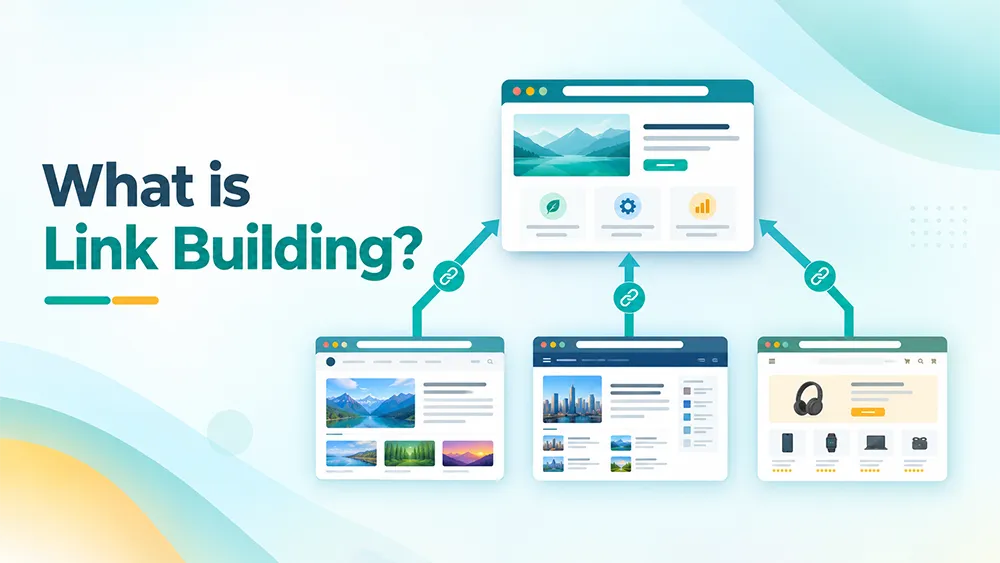
Link building is the deliberate process of acquiring hyperlinks from external websites that point back to your own website. These hyperlinks, commonly called backlinks, act as pathways that connect different pages across the internet. In simple terms, link building helps search engines understand which pages are trustworthy, relevant, and worth ranking higher.
The Anatomy of a Hyperlink
A hyperlink consists of two essential parts:
- Destination URL: The web page the link points to
- Anchor Text: The clickable text that users see
Together, these elements form a bridge that connects one piece of content to another, allowing both users and search engines to navigate the web.
The Search Engine Perspective
From a search engine perspective, links act as “votes of confidence.” When another website links to yours, search engines view this as a third-party endorsement. It signals that your content is valuable, credible, and worth referencing, which directly influences how search engines evaluate and rank your pages.
Why Link Building is Important
Understanding the benefits of link building for SEO is essential for any digital growth strategy. Backlinks function as the internet’s primary currency, signaling to search engines that your content is valuable, trustworthy, and worthy of promotion. Learn more about what are backlinks and how they support SEO.
1. Improves Search Rankings
Quality backlinks can strengthen your website’s credibility and help search engines understand the value of your content.
2. Increases Organic Traffic
Better search visibility can help your pages attract more clicks and bring more visitors through organic search.
3. Drives Referral Traffic
Links from relevant websites can send interested visitors directly to your website, creating an additional source of traffic.
4. Builds Website Authority
Earning links from reputable websites can strengthen your site’s authority and trustworthiness over time.
5. Helps Search Engines Discover Content
Links can help search engine crawlers discover new pages and understand how different pages across the web are connected.
6. Increases Brand Visibility
Being mentioned and linked to by relevant websites can introduce your brand to new audiences and increase online visibility.
7. Supports Industry Expertise
Links from respected publications and industry websites can help establish your website as a useful and credible resource.
8. Builds Valuable Relationships
Manual outreach can help you connect with publishers, journalists, businesses, and other professionals in your industry.
Want to explore these benefits in more detail? Read our guide on Benefits of Link Building: Key Reasons It’s Essential for SEO.
Types of Link Building
Before diving into specific methods, it is important to understand how many types of link building in SEO exist and how they differ in approach and impact. Each type follows a different strategy, ranging from ethical and sustainable practices to risky techniques that can harm your website. Knowing these differences helps you make informed decisions and build a backlink profile that supports long-term growth and credibility.
1. White Hat Link Building
White hat strategies represent the most ethical and sustainable approach to search engine optimization. These methods strictly adhere to webmaster guidelines by focusing on a human first philosophy where value is created before a link is requested.
Examples include publishing original research, creating helpful infographics, and engaging in genuine outreach to industry peers. By prioritizing transparency and quality, you build a penalty proof backlink profile that serves as a foundation for long term organic authority.
2. Black Hat Link Building
Black hat link building involves manipulative and high-risk tactics designed to deceive search engine algorithms through sheer force or trickery. This category is defined by aggressive spamming and the use of hidden links or sneaky redirects to artificially inflate rankings.
Common examples include buying bulk link packages, using automated software to blast comments, and building private blog networks or PBNs. While these shortcuts might offer immediate gains, they create a toxic footprint that eventually triggers severe manual penalties and permanent de-indexing.
3. Grey Hat Link Building
Grey hat tactics occupy the ambiguous middle ground where marketers stretch the rules without explicitly breaking them. This approach often involves paying for highly disguised editorial links or guest posts where the commercial relationship is intentionally hidden from search engines.
Another example is participating in excessive link exchanges or buying expired domains to redirect their existing power to a new site. While less immediately dangerous than black hat spam, these methods are still a gamble as algorithm updates frequently close these loopholes.
4. Natural Editorial Links
Natural or editorial links are the most prestigious endorsements because they are earned organically without any direct intervention from the site owner. These occur when a journalist or blogger finds your content so valuable that they cite it as a source or recommended resource.
For example, a major news outlet might link to your custom survey results or a university could reference your ultimate guide. Because these links represent an unsolicited vote of confidence, search engines view them as the strongest signals of trust and relevance.
5. Manual Outreach Links
Manual outreach is a proactive strategy where you acquire backlinks through deliberate and personalized email communication. This method involves identifying relevant websites and pitching them specific reasons to link to your content.
Typical examples include writing high quality guest articles for niche blogs, executing broken link building campaigns, or utilizing digital PR to provide expert quotes to reporters. Since an external editor must approve these links, they are considered earned placements that significantly boost your competitive ranking power.
6. Self-Created Links
Self-created links are manually placed by the site owner on platforms that do not require third party editorial oversight. This includes adding a website URL to business directories, forum signatures, user profiles, or blog comment sections.
Because these links are so easy to create and prone to spam, they hold the lowest value in modern SEO today. While they can be useful for foundational brand visibility or local discovery, they rarely pass enough authority to move the needle for competitive search terms.
How Link Building Works
To succeed at link building, you must understand how search engines process them behind the scenes. This technical evaluation determines how much value a link provides and how it influences your visibility in search results.
Crawling and Discovery
Search engine bots like Googlebot use links as digital pathways to navigate the vast landscape of the web. A new link points a bot to your site, helping it discover new pages and update its index. This continuous crawling process allows search engines to map out your overall site architecture and ensures that your latest content is found and displayed to users as quickly as possible.
Passing Link Equity (PageRank)
When a highly trusted and authoritative site links to yours, it passes a portion of its authority through the hyperlink. This flow of credibility is often referred to as link juice or PageRank and is a foundational ranking factor. By receiving these digital endorsements, your destination page gains significant ranking power, making it more likely to appear at the top of search results.
To understand how link equity works, how it flows between web pages, and why it matters for SEO rankings, read our guide on What Is Link Equity? How It Works and Why It Matters for SEO.
Context and Relevance Signals
Search engines do not just count links; they read the room to ensure every connection is meaningful. Algorithms analyze the surrounding text and the overall theme of the linking page to determine what your destination page is actually about. This check ensures that the endorsement makes logical sense and that the link comes from a topically related source, which carries far more weight than an unrelated mention.
Anchor Text Function
The clickable text of a link provides specific keyword clues to search engines regarding the destination topic. If the anchor text says digital marketing guide, it reinforces to the search engine that the destination page is highly relevant to that specific query. While using descriptive anchor text is helpful, maintaining a natural and diverse mix of phrases is essential to keep your backlink profile looking organic and trustworthy.
Understanding Link Quality vs. Quantity
Focusing on the caliber of your backlinks is far more effective than chasing a high volume of low-value mentions. One link from a highly authoritative site definitively outweighs thousands of links from low-quality or spam sites because search engines prioritize trust and editorial integrity over raw numbers.
Metric 1: Domain Authority and Rating
Domain authority (DA) and domain rating (DR) represent the overall strength, trust, and reputation of the referring website. Search engines view links from established, reputable domains as powerful endorsements, passing significant ranking power to your site compared to newer or less credible sources.
Metric 2: Niche Relevance
Relevance ensures a link comes from a website topically related to your own industry. For example, a web design link from a tech blog is far more valuable than one from a cooking blog, as it signals specific expertise within your particular field.
Metric 3: Placement on the Page
Location matters because in-content links located high up in the body text carry significantly more weight. Search engines prioritize these contextual placements over links buried in footers or sidebars, which are often ignored by users and seen as less valuable by algorithms.
Metric 4: Real Site Traffic
A link from a website that receives actual, verifiable human traffic is vastly superior to a link from a stagnant or abandoned site. High traffic levels signal to search engines that the referring domain is active, popular, and provides ongoing value to real readers.
Metric 5: Outbound Link Ratio
The value of a link is determined by how many other sites share that page. A link from a page with very few external links is more valuable than one from a page listing hundreds of links, as the link equity remains concentrated.
Follow vs. Nofollow Links: Why it Matters
The technical attributes attached to a hyperlink determine exactly how search engines treat that connection. Understanding these tags is vital for managing your backlink profile, as they dictate whether a link directly influences your rankings or simply serves as a navigational path for users.
Dofollow Links
Dofollow links are the standard hyperlinks that pass SEO value and link equity from one site to another. These links act as direct endorsements, telling search engines to count the placement as a vote of confidence that positively impacts your organic search rankings.
Nofollow Links (rel=”nofollow”)
Nofollow links contain a specific HTML tag that instructs search engine bots not to pass authority or endorse the destination site. While these links do not directly boost your ranking power, they are essential for directing traffic without violating search engine guidelines regarding unearned links.
Sponsored Links (rel=”sponsored”)
The sponsored attribute is used specifically to identify links that are the result of paid placements, advertisements, or affiliate agreements. Using this tag ensures transparency with search engines, allowing you to engage in commercial partnerships without risking penalties for manipulative link building practices.
User-Generated Content Links (rel=”ugc”)
The UGC attribute is designed for links placed by users within sections like blog comments, community forums, or guest posts. This tag helps search engines distinguish between editorial links added by a site owner and those added by the general public, preventing comment spam from distorting rankings.
The Value of Nofollow
Nofollow links remain crucial because they drive high-quality referral traffic and build brand awareness among new audiences. Furthermore, a mix of nofollow and dofollow links creates a natural, unsuspicious backlink profile, which is essential for maintaining long-term credibility with search engine algorithms.
Effective Link Building Strategies & Tactics
To build a strong backlink profile, you need a mix of proven strategies applied with consistency and intent. These link building tips focus on earning high-quality, relevant links rather than chasing volume, helping you build authority in a sustainable way.
1. High-Quality Guest Blogging
Guest blogging remains one of the most reliable ways to earn contextual backlinks from authoritative websites. The idea is simple: you contribute valuable, original content to another website in your niche, and in return, you receive a link back to your site.
The effectiveness of this strategy depends on quality and relevance. Publishing on low-quality or unrelated sites adds little value, while contributing to respected platforms can significantly strengthen your authority.
To make guest blogging work:
- Identify websites in your niche that actively publish guest content
- Study their content style, topics, and audience expectations
- Pitch unique, value-driven ideas instead of generic topics
- Include your link naturally within the content where it adds context
Learn more about earning quality links to your site.
2. Broken Link Building
Broken link building focuses on replacing dead links with your own relevant content. Websites often have outdated links that lead to 404 pages, which creates a poor user experience.
This strategy works because you are helping the site owner fix an issue while also earning a backlink.
A simple process looks like this:
- Find relevant websites in your niche with resource pages or blog content
- Use SEO tools or browser extensions to identify broken links
- Create or match content that fits the original intent of the broken link
- Reach out to the webmaster and suggest your link as a replacement
This approach is highly effective because it provides immediate value.
3. The Skyscraper Technique
The Skyscraper Technique is based on improving existing popular content. Instead of starting from scratch, you identify content that has already earned many backlinks and create something significantly better.
“Better” could mean more detailed, updated, visually appealing, or easier to understand.
Once your improved content is live:
- Find websites linking to the original content
- Reach out and explain how your version adds more value
- Suggest your content as a stronger alternative
This strategy works well because you are targeting proven link opportunities rather than guessing.
4. Resource Page Link Building
Many websites maintain curated lists of useful resources for their audience. These pages are designed specifically to link out to helpful content, making them ideal targets.
Your goal is to position your content as a valuable addition to these lists.
Focus on:
- Finding resource pages related to your niche
- Ensuring your content genuinely adds value to their audience
- Reaching out with a clear and concise pitch explaining why your content fits
This method works best when your content is educational, practical, or highly informative.
5. Digital PR and HARO / Connectively
Digital PR focuses on earning links from high-authority media websites. Platforms like HARO or Connectively connect journalists with experts who can provide insights for articles.
When your response is selected, you often receive a backlink from a trusted publication.
To succeed with this approach:
- Monitor daily queries from journalists
- Respond quickly with clear, expert-level insights
- Keep answers concise, relevant, and easy to quote
This strategy can generate some of the most powerful backlinks available.
6. Unlinked Brand Mentions
Sometimes, websites mention your brand without linking to it. These are missed opportunities that can often be converted into backlinks with minimal effort.
The process is straightforward:
- Track brand mentions using monitoring tools
- Identify mentions that do not include a link
- Reach out and politely request that the mention be turned into a clickable link
Since the author has already referenced your brand, the success rate is usually high.
7. Competitor Backlink Intersect
This strategy involves analyzing your competitors’ backlinks to find opportunities you are missing. If a website links to multiple competitors, there is a strong chance they may link to you as well.
Steps to apply this strategy:
- Identify your top competitors in search results
- Analyze their backlink profiles using SEO tools
- Find websites linking to them but not to you
- Reach out with a relevant pitch or content suggestion
This method removes guesswork and focuses on proven linking sources.
8. Creating Linkable Assets
Linkable assets are pieces of content specifically designed to attract backlinks naturally. Instead of asking for links, you create something valuable enough that others want to reference it.
Common examples include:
- Original research and industry data
- In-depth guides and tutorials
- Free tools, templates, or calculators
- Comprehensive glossaries or resource hubs
The key is uniqueness and usefulness. Content that offers something new or highly practical tends to earn links over time without constant outreach.
9. Ego Bait
Ego bait leverages recognition and social validation. You create content that features influencers, experts, or brands, which increases the likelihood that they will share or link to it.
This can include:
- Expert roundups
- Interviews
- Lists featuring top industry professionals
- Case studies highlighting specific brands
After publishing, notify the people you featured. Since the content highlights them, many will naturally promote it, helping you earn backlinks and visibility.
The Role of Content in Link Building
Outreach gets you in the door, but the content seals the deal.
Content as the Foundation
Establish this absolute rule: no webmaster will link to a blank page, a thin service page, or a low-effort sales pitch. You must earn the link by providing immense value.
Want to learn more about earning natural backlinks through valuable content? Read Google’s guide on building link-based popularity.
Types of Highly Linkable Content
Certain formats naturally attract backlinks better than others. Prioritize:
- Original research, custom statistics, and industry data.
- In-depth, long-form ultimate guides.
- Infographics and high-quality data visualizations.
- Interactive tools and custom templates.
E-E-A-T Integration
Search engines prioritize Experience, Expertise, Authoritativeness, and Trustworthiness(E-E-A-T). Demonstrating deep EEAT in your content ensures that other webmasters feel safe and confident linking to your site as a credible resource.
Content Promotion Synergy
Writing the content is only 20% of the job. Rigorous, targeted manual outreach makes up the remaining 80%. You must actively promote your assets to ensure the people who have the power to link to you actually see them.
Common Link Building Tools
To execute strategies effectively, using the right link building software can save time, improve accuracy, and help you scale your efforts. While there are many tools available, focusing on a few powerful and reliable ones is enough to get started and grow consistently.
Ahrefs
Ahrefs features a massive database for comprehensive backlink analysis and competitor research. It effectively tracks your link growth and identifies high-quality opportunities across any niche.
SEMrush
This complete SEO suite offers powerful backlink analytics and competitor strategy insights. Its built-in outreach tool suggests prospects and helps manage your entire campaign efficiently.
Moz Pro
Moz Pro provides beginner-friendly metrics like Domain Authority to evaluate link quality. It offers a simple way to prioritize opportunities based on trust and relevance.
BuzzStream
BuzzStream is a dedicated platform for managing outreach relationships and tracking email conversations. It replaces manual spreadsheets with a structured system as your campaigns grow.
Hunter.io
Hunter.io quickly locates and verifies email addresses for potential link prospects. This tool ensures your outreach messages reach the correct contact person to improve results.
BuzzSumo
BuzzSumo identifies trending topics and content that has already attracted significant backlinks. It is an essential tool for executing strategies like the Skyscraper Technique effectively.
Google Alerts
This free tool sends notifications whenever your brand or specific keywords are mentioned online. It is highly effective for converting unlinked brand mentions into valuable backlinks.
Link Building Mistakes to Avoid
Building backlinks can significantly improve your SEO, but doing it the wrong way can cause more harm than good. Avoiding these common mistakes will help you maintain a natural, trustworthy backlink profile and protect your site from penalties.
Buying Links Unnaturally
Paying for backlinks purely to manipulate rankings is a direct violation of search engine guidelines. While it may deliver short-term gains, it often leads to long-term damage.
Search engines are increasingly effective at detecting paid link schemes. Once identified, your site can face ranking drops or even manual penalties that are difficult to recover from.
Using Private Blog Networks (PBNs)
Private Blog Networks are groups of websites created solely to link back to a main site. These networks are designed to artificially inflate authority.
Although they may appear effective initially, PBNs leave clear footprints. When search engines detect them, all associated links can be devalued, and your site’s credibility can suffer significantly.
Over-Optimizing Anchor Text
Using the exact same keyword repeatedly as anchor text creates an unnatural pattern. For example, forcing your primary keyword into every backlink signals manipulation.
A natural backlink profile includes a mix of:
- Branded anchors
- Generic phrases
- Partial matches
- Naked URLs
This variation helps maintain authenticity and reduces risk.
Ignoring Link Relevance
Not all high-authority links are valuable. If a link comes from a website unrelated to your niche, it provides little contextual value.
Search engines prioritize relevance. A link from a smaller but niche-related site often carries more weight than one from a large but unrelated platform.
Prioritizing Quantity over Quality
Building thousands of low-quality links through automation tools may seem efficient, but it weakens your overall profile.
Links from spammy directories, irrelevant blogs, or low-quality sites can dilute your authority. A few strong, relevant links will always outperform a large volume of weak ones.
Unnatural Link Velocity
A sudden spike in backlinks within a short time can look suspicious, especially for new or small websites.
Natural link growth happens gradually. Consistent and steady acquisition signals authenticity, while sharp increases can trigger spam filters and closer scrutiny.
Reciprocal Linking at Scale
Exchanging links occasionally is normal, but doing it excessively creates a pattern that search engines can detect.
If a large portion of your backlinks comes from “you link to me, I link to you” arrangements, it reduces the perceived value of those links and weakens trust.
Ignoring the Nofollow Ratio
Focusing only on dofollow links creates an unnatural backlink profile. In reality, a healthy link profile includes a mix of both dofollow and nofollow links.
Nofollow links still bring traffic and visibility, and their presence makes your backlink profile appear more organic and balanced.
Conclusion: What is Link Building
Link building is not a quick hack or a one-time effort. It is a long-term strategy built on high-quality content, strong relevance, and genuine human relationships. The most effective results come from consistently applying link building best practices rather than chasing shortcuts or manipulative tactics.
It is also important to understand that link building requires patience. Earning quality backlinks takes time, and even after acquiring them, search engines need time to crawl, process, and reflect their impact in rankings. Consistency and steady effort matter far more than speed.
If you are just getting started, begin with a simple and practical step. Audit your current backlink profile, identify gaps or low-quality links, and explore opportunities such as unlinked brand mentions. From there, focus on creating your first linkable asset and start reaching out to relevant websites. Building momentum early will help you develop a sustainable and effective link building process over time.
Looking for Professional Link Building Services?
Manual Backlinks provides professional link building services focused on building relevant, high-quality backlinks through strategic outreach and proven link building methods. We help businesses strengthen their backlink profiles, improve online authority, and support long-term SEO growth. Contact us today to discuss your link building requirements.
Frequently Asked Questions
Here are answers to some common questions about link building, backlinks, and how they support SEO.
How much does link building cost?
The cost of link building varies based on several factors. These include backlink quality, website authority, industry competition, link building strategy, content creation, and outreach effort. Different campaigns require different levels of time and expertise. For a detailed breakdown of pricing and the factors that affect it, read our guide on Link Building Price in 2026: A Comprehensive Guide on Backlink Cost.
Is link building still relevant to SEO?
Yes, link building remains highly relevant. Backlinks continue to signal trust, authority, and relevance, making them a core factor in how search engines rank websites.
What is the difference between link building and backlinks?
Backlinks are the actual links from one website to another. Link building is the process of acquiring those backlinks through various strategies and efforts.
Is link building illegal?
No, link building is not illegal. However, using manipulative or deceptive practices that violate search engine guidelines can lead to penalties and loss of rankings.
Is buying backlinks allowed?
Buying backlinks purely to influence rankings is against search engine guidelines. While paid links may exist, they must be properly disclosed using attributes like sponsored tags to avoid risks.
How many backlinks do I need to rank?
There is no fixed number. The quality, relevance, and authority of backlinks matter far more than quantity. A few strong backlinks can outperform a large number of low-quality ones.
How long does link building in digital marketing take to show results?
Link building in digital marketing is a long-term strategy, and results typically take a few weeks to several months depending on competition, link quality, and consistency.